If keeping up with a larger house feels less exciting than it used to, you are not alone. Many Sandy Springs homeowners reach a point where less maintenance, easier access, and a simpler monthly routine sound a lot better than extra square footage. The good news is that downsizing here is not a one-size-fits-all move, and you have real options to choose from. Let’s dive in.
Why Sandy Springs Works for Downsizers
Sandy Springs gives you a rare mix of convenience and variety. The city has an estimated 2025 population of 108,080, about 51,204 households, and strong connectivity through I-285, GA-400, and four MARTA rail stations.
You also get lifestyle flexibility. Sandy Springs includes more than 950 acres of parkland, over 20 miles of Chattahoochee River shoreline, and the walkable City Springs district with restaurants, fitness studios, residential apartments, City Hall, and a performing arts center. If your goal is to stay connected without keeping up a large property, that mix matters.
What Downsizing Means in Sandy Springs
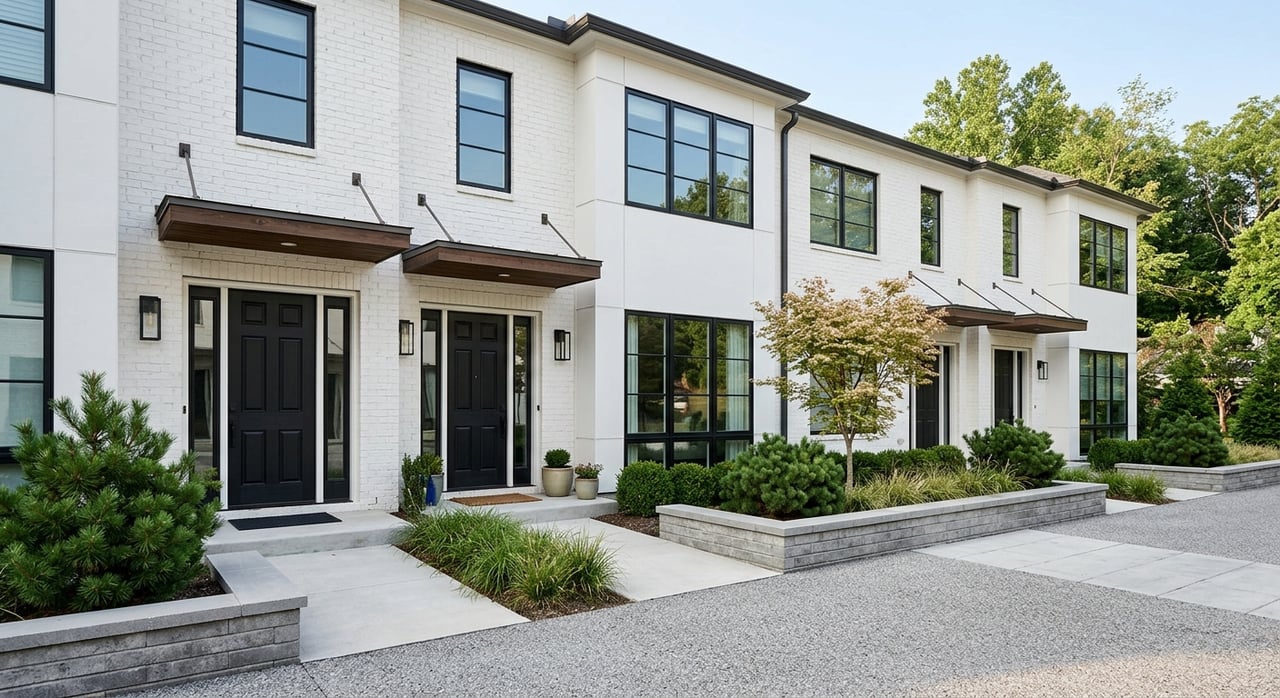
Downsizing in Sandy Springs usually does not mean giving up quality. In many cases, it means trading yard work, exterior upkeep, and a long home maintenance list for an attached home with shared amenities and association-managed services.
Local housing research suggests attached homes are an important downsizing path, even though they are still a smaller share of the for-sale market. The city’s housing needs assessment found that 93% of condo sales were below $400,000, with newer post-2000 condo development concentrated in the $250,000 to $400,000 range.
A later city master-plan addendum also noted that attached rental housing is more common than attached for-sale housing, while larger low-rise condos, stacked townhomes, townhomes, and rowhomes are likely to remain especially desirable for-sale formats. In plain terms, that means good attached options exist, but the right one can take some strategy to find.
Condo or Townhome: What Changes?
How ownership feels different
Moving from a detached house to a condo or townhome often shifts your responsibilities. Instead of handling every exterior issue yourself, you may pay monthly dues that support shared spaces, maintenance, and reserve funding, depending on the community.
Under Georgia condominium law, common expenses and reserve funding are tied to the condominium instruments. For you, that means the monthly dues are not just a number on a listing. They are a key part of how the property operates and what level of support you are really buying.
What HOA dues may cover
In Sandy Springs, dues can vary quite a bit from one community to another. Some communities keep things simple and focus on shared-area upkeep, while others offer much broader service packages.
Depending on the building or community, dues may include:
- Exterior maintenance
- Pest control
- Trash service
- Water
- Insurance coverage for common elements
- Concierge service
- Valet
- Transportation
- Meal allowances
- Reserve funding
That range is important. One condo may simply reduce your maintenance load, while another may feel closer to full-service living.
Privacy and layout tradeoffs
Privacy often improves as homes become more townhouse-like or as buildings get smaller, but that is not a hard rule. A boutique building, a one-level condo, and a multilevel townhome can all feel very different in daily life.
For example, The Dunhill is a 19-unit boutique building with one-level living, covered parking, and balconies or screened porches. Aria townhomes offer multilevel layouts, covered decks, and some end-unit and green-space-oriented options. Older garden-style condo communities can also feel tucked away thanks to mature trees and shared open space.
Sandy Springs Downsizing Options by Style
Value condo options
If your top priority is lowering your monthly housing footprint, an older condo can be a practical starting point. One current example is at 315 Hilderbrand Drive, a 2-bedroom, 1-bath condo with 837 square feet listed around $130,000.
This type of home shows what entry-level attached living can look like in Sandy Springs. The listing highlights a neighborhood pool, mature trees, walkability to restaurants, shopping, entertainment, and public transportation, plus easy access to I-285 and GA-400.
55+ condo living
If you want a community designed specifically for older adults, Mount Vernon Towers is one notable Sandy Springs option. Current or recent listings there have ranged from about $149,900 to $236,200.
The tradeoff is that monthly HOA fees are much higher, with recent examples around $1,100 to $1,448 per month. In return, listings describe services and features that can include utilities, meal allowance, security, transportation, reserve funding, dining, fitness, organized activities, and pool access.
Boutique mid-rise condos
If you want newer construction without the scale of a large tower, boutique mid-rise condos can hit a sweet spot. The Dunhill is a strong example, with city planning materials describing it as a 19-unit low-rise condo building and recent listings around the mid-$400,000 range.
A recent 2-bedroom, 2-bath listing was around $475,000. Features described in listings include covered gated parking, a pool with summer kitchen, a fitness center, and outdoor living spaces such as balconies or screened porches.
Full-service high-rise condos
For some downsizers, the biggest win is service. Park Towers is a classic example of a full-service high-rise option in Sandy Springs, with current listings ranging from about $234,900 to $320,000, plus a higher square-footage example around $438,000.
Listings highlight features such as a resort-style pool, hot tub, 24/7 concierge, dog park, dry cleaners, private parking deck, storage, and controlled access. Some listings also note that HOA fees may cover reserve funding, landscaping, concierge, valet, insurance, exterior maintenance, water, and trash.
Luxury townhomes
If you are not ready to go much smaller, a luxury townhome may offer the best balance. Aria North townhomes currently list around $599,900 to $655,000, with some higher-end examples near $728,000 and above $1 million.
These homes are useful for owners leaving a larger detached house but still wanting more space and privacy. Listings consistently describe two pools, a clubhouse, a fitness center, park and trail amenities, walkable access to Aria Village shops and restaurants, and quick access to GA-400, I-285, and MARTA.
How to Compare Sandy Springs Condos and Townhomes
Choosing between communities is about more than price per square foot. When you downsize, your monthly cost structure, daily routine, and future needs all matter.
Here are the comparison points that deserve the closest look.
Review the HOA budget carefully
The HOA budget is one of the most important documents in your decision. In a condo, common expenses and reserve funding are a core part of ownership structure, so the declaration, budget, and what the dues actually cover matter just as much as the kitchen or view.
You want to understand whether the association appears to be planning for ongoing upkeep. A lower monthly fee can look attractive at first, but it may not tell the whole story if reserve funding is thin or major work is approaching.
Ask about capital work and assessments
Before you commit, ask whether the community has pending capital projects or any special assessment risk. That question matters in both older and newer communities.
This step can help you avoid surprises after closing. It also gives you a better sense of how the association manages the property over time.
Match parking to your lifestyle
Parking can vary widely across Sandy Springs attached communities. Depending on the property, you may find assigned spaces, covered decks, gated parking, private garages, or valet service.
Think about how you live day to day. If you want easy loading, fewer stairs, or stronger weather protection, parking details should be part of your short list, not an afterthought.
Think about accessibility now
If your goal is to simplify for the long term, accessibility should stay front and center. In Sandy Springs, that might mean a one-level condo, a boutique elevator building, or avoiding a multilevel townhome with a lot of stairs.
Even if stairs are not a problem today, it is smart to think ahead. Downsizing usually works best when the next home fits both your current lifestyle and your likely future needs.
Define your ideal service level
Every downsizer has a different idea of convenience. Some people want basic exterior maintenance and a lower payment, while others want a lock-and-leave setup with concierge service, transportation, dining, or other support.
That is why comparing dues line by line matters. The best value is not always the lowest monthly fee. It is the community that gives you the right level of help for the way you want to live.
Walkability in Sandy Springs
Walkability in Sandy Springs often looks different from an older city grid. Here, it usually means access to City Springs, MARTA, or mixed-use village-style areas rather than block-after-block urban storefronts.
That can still be a major benefit when you downsize. City Springs offers a walkable district anchored by civic space, arts, restaurants, and fitness, while MARTA connects Sandy Springs to Buckhead, Midtown, Downtown, and the airport.
Several attached-home listings also specifically highlight walkability to restaurants, shopping, public transportation, or village retail. If being able to step out for dinner or cut down on driving matters to you, location within Sandy Springs is just as important as the unit itself.
The Big Takeaway for Downsizers
The strongest takeaway is simple: downsizing in Sandy Springs is a spectrum, not a single product type. You can look at older value condos, 55+ communities, boutique mid-rise condos, full-service towers, and newer luxury townhomes depending on your budget and goals.
City planning documents suggest low-rise condos and townhome-style homes remain especially attractive in the local for-sale market. That makes Sandy Springs a strong place to right-size without giving up convenience, access, or lifestyle options.
If you are weighing whether to sell a larger home and move into a condo or townhome, the best next step is a plan that compares your sale proceeds, target monthly costs, and must-have features side by side. The right move is usually less about going smaller and more about living smarter for this next chapter.
When you are ready to talk through your options in Sandy Springs, The Suits Team can help you evaluate timing, pricing, and the attached-home choices that best fit your goals.
FAQs
What types of downsizing homes are available in Sandy Springs?
- Sandy Springs downsizers can consider older value condos, 55+ condo communities, boutique mid-rise condos, full-service high-rise condos, and newer luxury townhomes.
What should Sandy Springs condo buyers review before purchasing?
- You should closely review the HOA budget, what the dues cover, reserve funding, parking, accessibility, and whether the community may face future capital work or special assessments.
Are Sandy Springs condos usually less expensive than single-family homes?
- The research shows many condo options fall below the city’s median owner-occupied home value of $669,956, with 93% of condo sales reported below $400,000 in the city housing needs assessment.
What is walkable condo living like in Sandy Springs?
- In Sandy Springs, walkability often means being near City Springs, MARTA, or mixed-use village retail with access to restaurants, shopping, entertainment, and transit rather than a traditional downtown street grid.
How do Sandy Springs townhomes compare with condos for downsizers?
- Townhomes may offer more space, more privacy, and a layout that feels closer to a detached home, while condos may offer one-level living and, in some communities, broader service packages through the HOA.