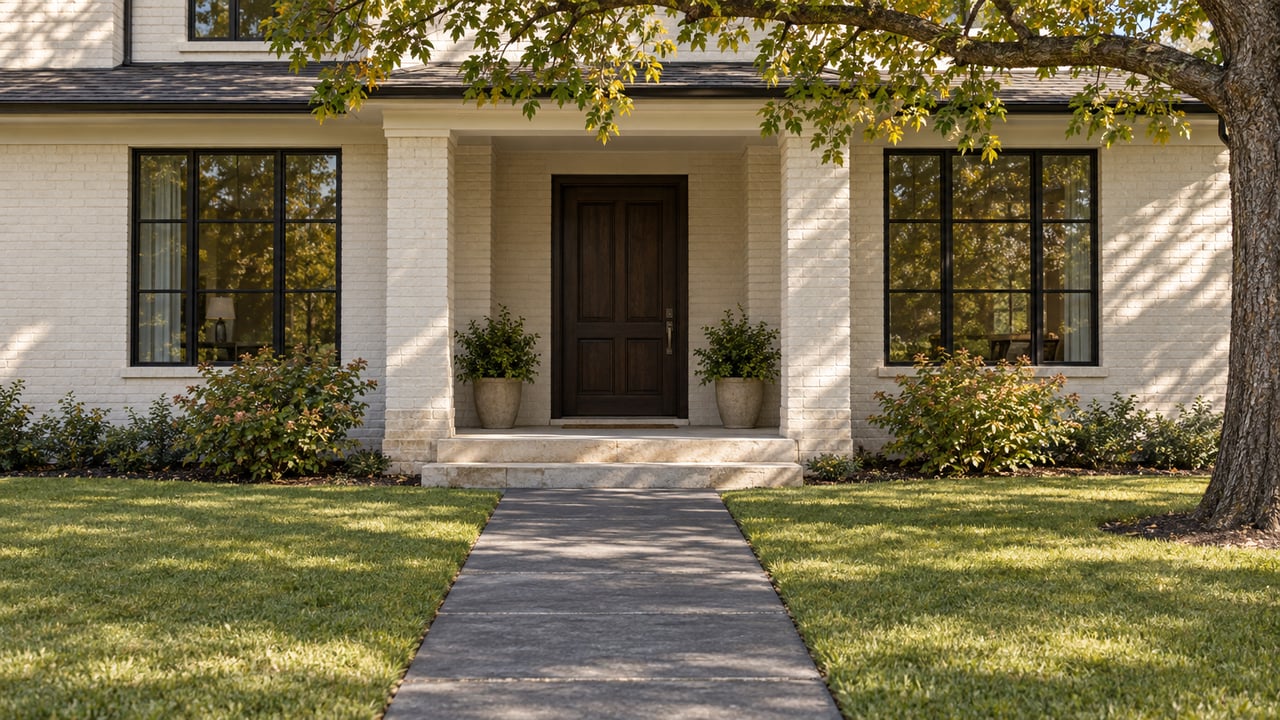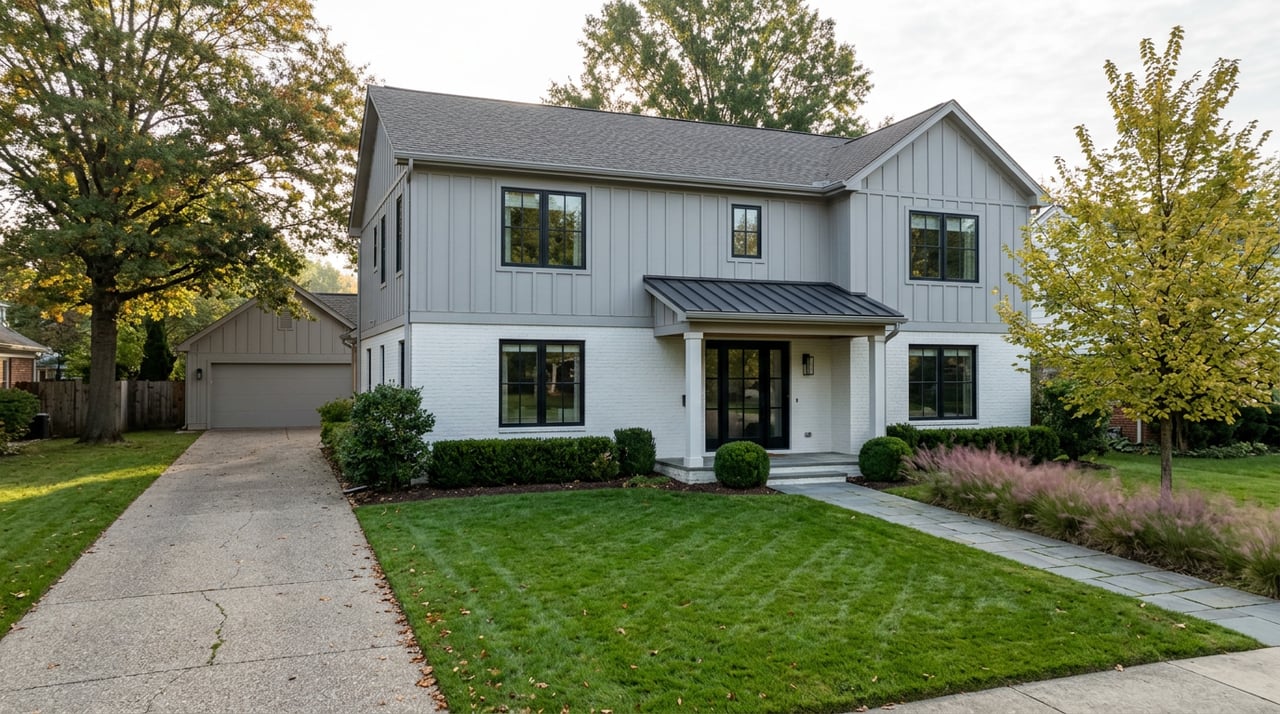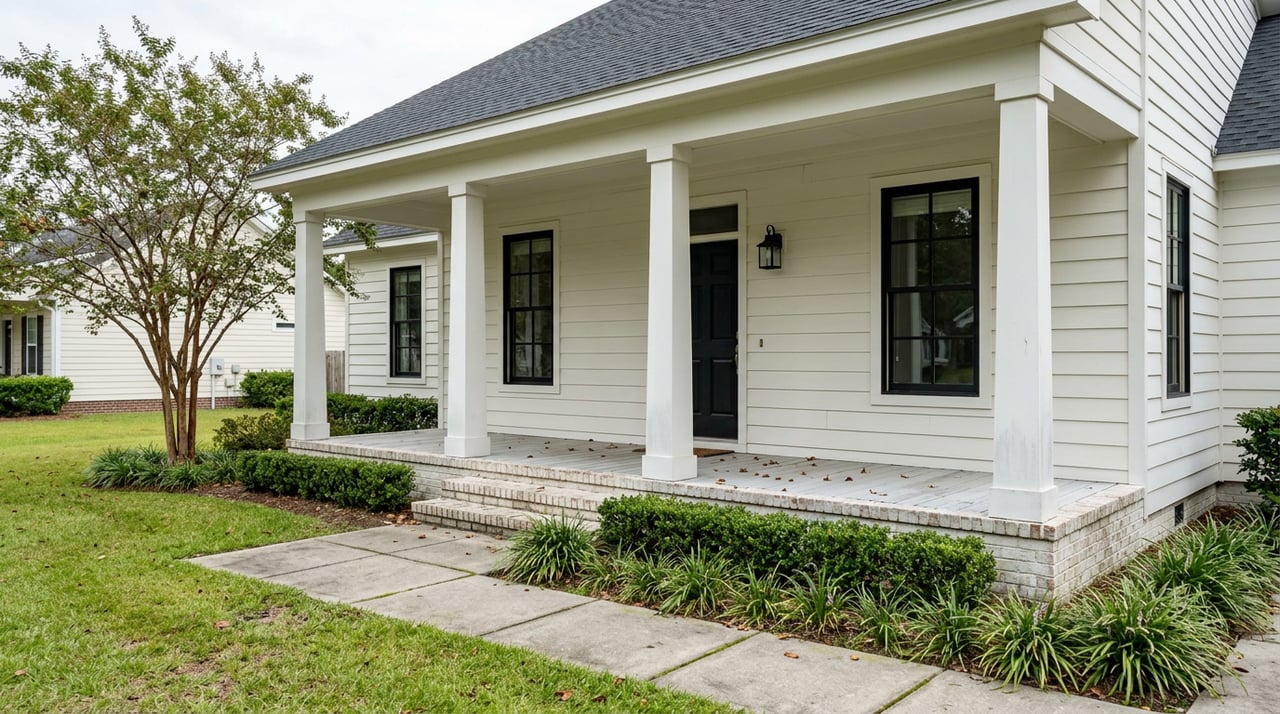
Most buyers touring a Greek Revival on Mimosa Boulevard assume the strictest rule waiting for them is paint color. It isn't. Georgia law explicitly carves paint out of what a local historic preservation commission can control, and a 2014 opinion from the state attorney general settled the question for Roswell specifically. The rule that actually slows people down doesn't touch color at all. It touches timing, and it kicks in before you're even allowed to submit an application.
If you're weighing a home inside Roswell's 640-acre Historic District, the paperwork you'll actually wrestle with looks nothing like the folklore. Here's what the Historic Preservation Commission controls, what it can't touch, and where the real friction sits for anyone buying or renovating inside the boundary.
What the Commission Actually Reviews
Roswell's Historic District earned National Register of Historic Places recognition in 1974, and the designation runs through neighborhoods built around the city's Greek Revival core, including landmark properties like Barrington Hall and Bulloch Hall, both dating to the 1830s and 1840s. The Historic Preservation Commission, made up of citizen volunteers who mostly carry backgrounds in history or architecture, reviews design for the entire district under that designation.
The commission's authority covers what state law calls a "material change in appearance." That includes new construction, any change to a building's exterior architectural appearance, demolition or moving of structures, and alterations to walls, fences, steps, and other exterior features. Before any of that work happens, the property owner needs a Certificate of Appropriateness, commonly shortened to COA, from the commission.
Skip that step and the consequences aren't hypothetical. State preservation guidance is direct about what happens when work proceeds without approval: fines, permit delays, and the possibility that the commission orders unapproved alterations reversed. For a buyer inheriting a home where a prior owner swapped windows or added a fence without going through the process, that risk transfers with the deed.
The One Thing the Ordinance Doesn't Touch
Here's the part that surprises almost everyone who reads the ordinance closely. Georgia's Historic Preservation Act defines "material change in appearance" with a specific exception written into the statute: exterior paint alterations don't count. In 2014, Roswell's city attorney asked the Georgia Attorney General's office to confirm whether the Historic Preservation Commission could regulate paint color anyway, perhaps through a local amendment. The answer was no. The opinion states plainly that a local government can't enact an ordinance that conflicts with the general state law, and the state law excludes paint from the definition entirely.
Practically, that means a homeowner in the district can repaint a facade whatever color they choose without a COA, while replacing the same house's front door hardware or adding a side porch triggers full commission review. The two aren't remotely equivalent in the process, and buyers who assume the opposite tend to budget for the wrong risk.
The Actual Bottleneck: You Can't Even Apply Without a Meeting First
The friction that catches people off guard isn't a design rule. It's a scheduling one. Roswell's Community Development Department requires every applicant to complete an orientation with staff before the department will accept a Certificate of Appropriateness application at all. There's no fast path around it. The orientation happens first, then the application, then a spot on the commission's monthly agenda.
The Historic Preservation Commission meets once a month at 38 Hill Street, with 2026 dates already set for September 9, October 14, November 12, and December 9. If a buyer closes in October planning a spring exterior renovation, the realistic sequence looks like: staff orientation, then application prep, then waiting for the next open commission slot, then the meeting itself, then mailed approval before a building permit can even be pulled. Renovation timelines that don't build in that lag tend to slip by a full commission cycle or more.
What This Means for the Money Side, Right Now
Georgia's incentive landscape for historic rehabilitation shifted meaningfully heading into 2026, and the timing matters for anyone weighing whether a fixer-upper's tax benefits pencil out.
| Program | What it does | Who qualifies | 2026 timing |
|---|---|---|---|
| State Historic Home Tax Credit | Dollar-for-dollar state income tax credit for rehab costs | Owner-occupied homes locally designated or contributing to a historic district | Applications opened Oct 1, 2025; work can't start before Jan 1, 2026 |
| Preferential Property Tax Assessment | Freezes county assessed value roughly 8 to 9 years after certified rehab | Properties on or eligible for the Georgia Register, with fair market value raised at least 50% for owner-occupied use | Ongoing program, requires HPD certification and county filing |
| Federal 20% Rehabilitation Credit | Federal income tax credit for substantial rehab | Generally income-producing property only | Ongoing, rarely applicable to a typical owner-occupant |
The Historic Home Tax Credit is the one to understand before assuming it works like the older freeze. It's a new program: applications opened October 1, 2025, and the state built in a hard floor barring any qualifying rehabilitation work from starting before January 1, 2026. That floor has already passed, but the program is still young enough that a buyer should confirm current processing timelines and the Substantial Rehabilitation Test requirements with the Department of Community Affairs before counting the credit into a renovation budget.
The Preferential Property Tax Assessment freeze is the older, steadier option, and it rewards patience over speed. It requires a substantial rehab, defined as raising the property's fair market value by at least 50% for an owner-occupied home, and at least 5% of the qualified rehabilitation spend has to go toward exterior work specifically. In exchange, the county assessment stays frozen for roughly eight to nine years before stepping back up to current value. The federal 20% credit, by contrast, is largely off the table for a family buying a primary residence, since it's built for income-producing property.
Ask for the Paper Trail Before You Write the Offer
None of this shows up on a listing sheet, which is exactly why it belongs in due diligence rather than in the inspection period surprise pile. Before finalizing an offer on a home inside the district, ask the seller for:
- Any prior Certificates of Appropriateness issued for the property, including what work they covered
- Permit history for exterior changes, particularly additions, window replacements, or fencing
- Documentation of whether any past renovation used the Preferential Property Tax Assessment freeze, since that status transfers with specific filing obligations
A home with undocumented exterior work can complicate more than future permits. Historic district properties already draw from a thinner pool of true comparables than a standard subdivision, and lenders factor that into appraisal risk. Clean paperwork on what was changed and when helps close that gap.
The District Isn't Standing Still
None of this friction has slowed the city's own investment in the historic core. The Founders Park initiative is stitching together Bulloch Hall, Mimosa Hall, and Barrington Hall into a connected greenspace, with Mimosa Hall's new event lawn and support building slated for completion by early summer 2026, and the city already booking events there for August and beyond. A few miles downstream, Riverside Park closed in February 2026 for a bond-funded, roughly $13.8 million renovation tied to the city's broader River Parks Master Plan, with a summer 2027 reopening targeted. Neither project changes what a homeowner can do to their own facade, but both signal a city still willing to spend on the assets that make this district worth the extra paperwork in the first place.
By January 2026, Roswell's citywide median listing price sat near $675,000, while townhomes specifically within the Historic District posted a median sale price of $625,000 in December 2025. Those numbers move with the broader Atlanta market and shouldn't be read as fixed, but they suggest a segment still commanding a real premium for the address, the walk to Canton Street, and the character that comes with the review process rather than despite it.
Frequently Asked Questions
Does the paint exception cover trim and shutters too? The statutory exclusion is for exterior paint alterations broadly, which is what the 2014 attorney general opinion addressed. Structural trim replacement, as opposed to simply repainting existing trim, would fall under exterior architectural changes and likely need a COA.
What if I already own a historic district home and past work wasn't approved? Reach out to Roswell's Community Development Department before doing anything further. State guidance notes that unapproved work can be required to be reversed, so getting ahead of it, rather than compounding it with new changes, is the safer path.
Can I get a building permit while my COA application is still pending? No. A Certificate of Appropriateness is required before a building permit can be issued for any material change covered by the ordinance.
If you're weighing a purchase inside Roswell's Historic District, or trying to figure out whether a renovation timeline actually works before the ink dries, The Suits Team can walk the permit history and process timing with you before you write the offer, not after. Get Your Instant Home Valuation to see where your Roswell property stands today.